
More Energy, Better Sleep, Fewer Drinks
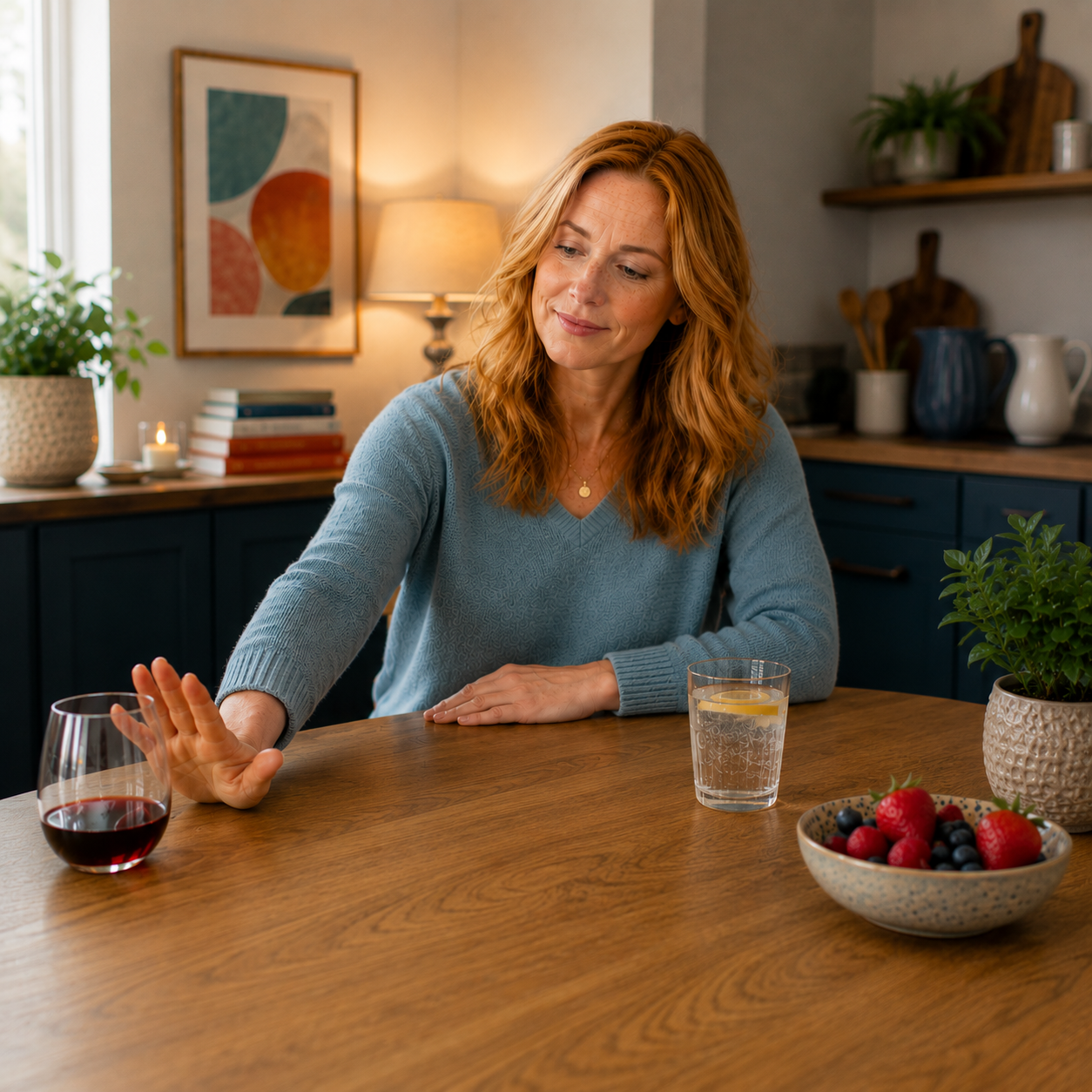
“It wasn’t about creating a rigid rule, but about introducing more intention around when and why I was drinking.”
About seven years ago, I made a small change that has had a bigger impact than I expected. I started drinking less.
This wasn’t a dramatic decision or a hard stop. It was more of a gradual realization that something that used to feel fine didn’t feel quite the same anymore.
In my 30s, I could have a glass of wine after work and not think much of it. But as I moved into my 40s, I began to notice a shift. Even one drink would sometimes leave me feeling off the next day. My sleep wasn’t as restful, my energy felt lower, and my workouts didn’t feel as strong. It wasn’t a major issue, but it was enough to make me pause and pay attention.
Over time, I started experimenting with a simple change. I began limiting alcohol to Saturdays, unless there was a special occasion. It wasn’t about creating a rigid rule, but about introducing more intention around when and why I was drinking.
What I noticed fairly quickly was that I was sleeping better and waking up with more energy. My workouts felt stronger, and over time I also noticed some weight loss without making other significant changes. None of this was dramatic on its own, but the consistency of feeling better day after day made the difference meaningful.
What has been just as interesting is how this shift shows up socially. Alcohol is often the default around plans, dinners, and celebrations, and it’s not uncommon to be asked “why aren’t you drinking?” as if not drinking is the exception rather than a normal option.
I’ve found myself wishing for a small cultural shift. One where choosing not to drink doesn’t require explanation, and where it feels just as natural to opt out as it does to opt in. The good news is that alcohol-free options have come a long way, and I’ll occasionally enjoy a non-alcoholic beer or an alcohol-free spirit, which makes it easier to still feel part of the experience and enjoy familiar tastes without the trade-offs.
This isn’t about judgment or suggesting that anyone should make the same choice. It’s simply an invitation to notice your own experience and consider what feels best for you. You might ask yourself how you feel after a drink, how it impacts your sleep, your energy, or your workouts, and whether a small adjustment could make a difference.
For me, the answer wasn’t to eliminate alcohol entirely, but to be more intentional about it. That shift alone has had a meaningful impact on how I feel day to day.
This is what the Physical facet of the Four Facets of Better Living looks like in practice. It’s not always about big, sweeping changes, but about paying attention to what your body is telling you and making small adjustments that support your overall energy and wellbeing.
This post is part of an ongoing blog series exploring the Four Facets of Better Living: physical, personal, professional, and prosperity.
If you’re interested in experiencing this work more deeply, you can fill out the contact form to learn about future Resilience for Progress retreats.
Because sometimes the smallest changes create the biggest shifts.